Chipless formation
Material is displaced to form the thread rather than removed as cutting chips.
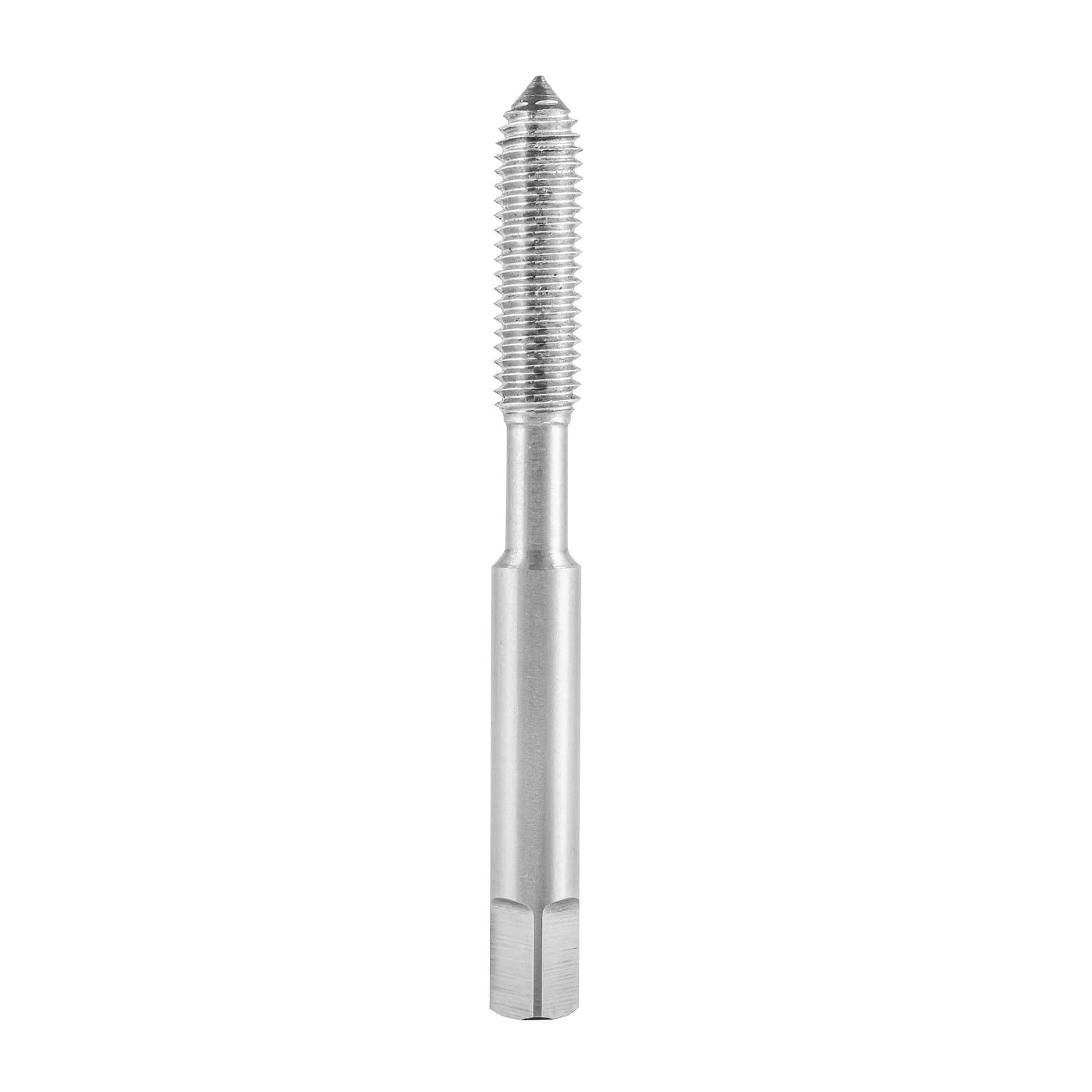
Thread Roll Forming Tap
Product image shown for this product family. Confirm the selected configuration in your quotation.
SWAGIN product family
Chipless thread forming for suitable ductile materials.
SWAGIN HSS thread-forming roll taps create internal threads by plastically displacing compatible material rather than cutting, so the forming process does not generate conventional chips. The source describes a special lobe profile and lubrication grooves. Suitability depends on material ductility, pre-hole, lubrication, machine setup and thread requirements. Share the size, thread, workpiece material, quantity and drawing reference so Swastik Grand Industries can review the correct specification.
Product overview
SWAGIN HSS thread-forming roll taps create internal threads by plastically displacing compatible material rather than cutting, so the forming process does not generate conventional chips. The source describes a special lobe profile and lubrication grooves. Suitability depends on material ductility, pre-hole, lubrication, machine setup and thread requirements. The suitable grade, geometry, thread form, tolerance, coating and dimensions depend on the material, machine and component drawing.
Product-family information is a starting point, not a live inventory or universal suitability claim. Confirm technical and commercial details in the quotation.
Application-led review
Thread forming in suitable ductile metal components across manufacturing, automotive and machinery contexts. Confirm workpiece, pre-hole and process conditions; the source gives no numeric torque, cycle-time or tool-life guarantee.
Material is displaced to form the thread rather than removed as cutting chips.
Pre-hole diameter and tolerance are critical to the formed thread; confirm them against the material and specification.
The source describes a special lobe profile and lubrication grooves; confirm the configuration supplied for the selected size.
The source lists manual and machine tapping applications. Confirm the machine, alignment and cycle.
The source lists stainless steel, carbon steel, aluminium and non-ferrous alloys; verify suitability for the exact material and hardness.
Confirm the required gauge, tolerance class and acceptance method for the formed thread.
Technical information
These product-family details guide the enquiry. Confirm dimensions, grade, tolerance, availability and commercial terms in the quotation.
Practical thread reference
For HSS taps and dies, metric pitch is measured in millimetres; inch threads are usually specified in TPI (threads per inch).
| Thread name | Full name / meaning | Example size |
|---|---|---|
| M – Metric Coarse | ISO metric coarse thread | M10 × 1.5 mm |
| Metric Fine / MF | ISO metric fine thread; normally marked M with pitch | M10 × 1.0 mm |
| UNC | Unified National Coarse | 1/2″–13 UNC |
| UNF | Unified National Fine | 1/2″–20 UNF |
| UNEF | Unified National Extra Fine | 1/2″–28 UNEF |
| UN | Unified constant-pitch series, such as 8-UN, 12-UN and 16-UN | 1-1/2″–8 UN |
| UNS | Unified National Special | 1/2″–24 UNS |
| UNR | Unified thread with a rounded external root | Specify size, TPI and series |
| UNJ / UNJC / UNJF / UNJS | Unified J-profile threads, including coarse, fine and special series | Specify complete drawing designation |
| BSW | British Standard Whitworth, coarse | 1/2″–12 BSW |
| BSF | British Standard Fine | 1/2″–16 BSF |
| BSPP / G | British Standard Pipe Parallel | G 1/2 |
| BSPT / R | British Standard Pipe Taper; R denotes external taper | R 1/2 |
| Rc / Rp | BSP mating internal threads: Rc taper, Rp parallel | Rc 1/2 or Rp 1/2 |
| NPT | National Pipe Taper | 1/2″–14 NPT |
| NPTF | Dryseal National Pipe Taper | 1/2″–14 NPTF |
| NPSM / NPSL / NPSC | American straight pipe-thread series for different applications | Specify exact series |
| BA | British Association thread | 0 BA, 2 BA, 4 BA |
| BSB | British Standard Brass thread | Diameter × TPI BSB |
| BSC / CEI | British Standard Cycle / Cycle Engineers’ Institute | Diameter × TPI BSC |
| ACME | Inch trapezoidal thread, 29° profile | Diameter × TPI ACME |
| Stub ACME | Shallower ACME thread | Diameter × TPI Stub ACME |
| Tr | Metric trapezoidal thread, 30° profile | Tr20 × 4 |
| Buttress | Asymmetric thread for heavy axial loads | Specify standard and profile |
| Rd | Round thread | Specify standard, diameter and pitch |
Unified thread families are covered by ASME B1.1. This practical industry list includes common metric, Unified, British and pipe series; it is not every specialist thread standard worldwide.
Thread forming reference
Thread-forming roll taps need a compatible material and a controlled pre-hole. Confirm the specific thread, workpiece and machine setup before selection.
| Consideration | Cutting tap | Thread-forming roll tap |
|---|---|---|
| Thread formation | Cuts material away to form the thread profile. | Plastically displaces compatible material to form the thread. |
| Chip behavior | Produces chips that need suitable evacuation, especially in blind holes. | The source describes chipless forming with no conventional cutting chips. |
| Workpiece | Select tool geometry and grade for the material and cutting process. | Requires sufficiently ductile material; suitability depends on its grade and hardness. |
| Pre-hole | Use the specified tap-drill size for the thread and material. | Pre-hole diameter is critical; confirm the forming-tap pre-hole for the exact thread and material. |
| Lubrication and hole type | Use lubrication and chip handling suited to the cutting operation. | The source describes lubrication grooves and use in blind or through holes, subject to tap design and setup. |
This comparison is a selection guide, not a pre-hole chart. Request the forming-tap pre-hole diameter and acceptance method for the exact thread, material and tolerance.
Thread Roll Forming Tap enquiry
Share your dimensions, material, quantity or drawing reference. The form prepares an email draft for review.
Continue exploring
 View all products
 Request a quote